
By Teesta Bhola-Shah
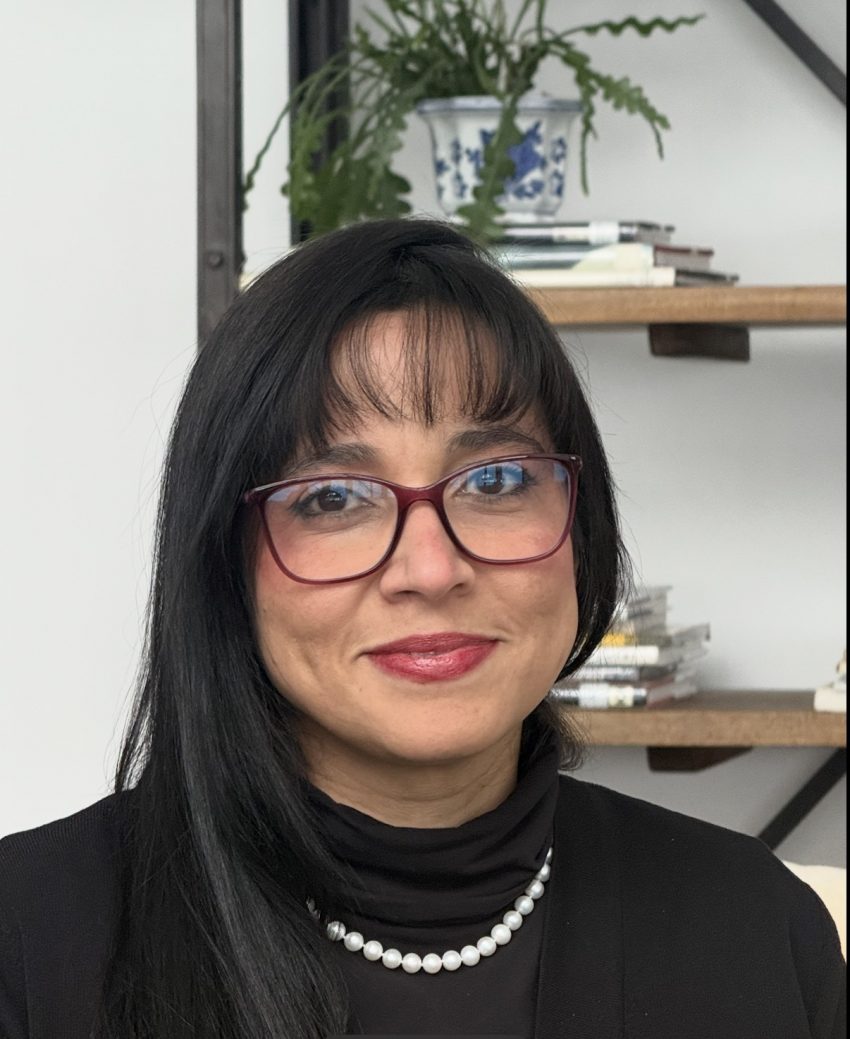
If you’ve taken Spanish at Chatham High School, chances are you’ve been encouraged to speak up, debate with classmates, or think more deeply about culture. That approach comes directly from Señora Fix, whose classroom centers language as a reflection of identity.
Señora Fix did not always envision herself as a teacher. “I didn’t know that I was going to be a teacher at first. I thought that I was going to do something with math or science. That was my forte in high school,” she said. Her perspective shifted after immigrating to the United States. “When I came to America as an immigrant, I thought that Spanish was such a big part of who I am. I feel compelled to show the culture, the language, the beauty, the stories, and somehow empower the students to be proud of who they are and to get a voice.”
“Students learning about the culture is very important to me,” Señora Fix said. “What I’m expecting is appreciation for the Spanish culture, and also empathy.” For her, language opens the door to understanding others. “I think the language and culture, when you learn about somebody else, allows you to do that in different platforms.”
She currently teaches Spanish III and AP Spanish, and one unit consistently stands out. “This year, in the past two years, I’ve been doing AP and Spanish III, and I love them both because they have something in common—the art unit,” she said. “I cannot talk about Spanish culture without talking about the painters and the music and how important that is, not only for the Spanish community, but worldwide.” Artists like “Picasso or Dalí or Frida Kahlo,” she explained, “have a bigger repercussion across countries, not only Spanish culture.” While Picasso is her favorite, she added, “I definitely like many other people that are not as famous.”
Senora Fix’s teaching style includes lots of public speaking. “Believe it or not, I know you guys complain about speaking in public, being interactive with other students, but you really enjoy it,” she said. “You really enjoy talking to your peers, you really enjoy debating with your peers, and you really enjoy showing how much you know. You feel accomplished.”
One of the biggest obstacles she sees at CHS is students’ fear of making mistakes. “You guys want to be perfect, and I find it challenging teaching you that learning a second language is imperfect,” Those mistakes, she explained, are essential. “It helps me to teach better, to see what I have to do.”
Culture is the most important aspect of her class. “Without the culture, I don’t think that it’s worth it to teach the language,” she said. “It’s actually the name of the class—AP Spanish Language and Culture.” She emphasized the importance of authenticity. “Spanish-speaking countries are very different among each other. The music in Puerto Rico sounds very different than the music in Argentina or in Spain, so I try to do it as much as possible with authentic material.”
The most rewarding moments for Señora Fix come from watching students grow more confident. “When you guys want to show me that you can do it better, I feel something inside me,” she said. “When a student tries to do better, it charges me up.”
She sees Spanish as an essential part of a CHS education. “What I would hope to get out of my Spanish class is to be not only knowledgeable about the Spanish culture, but to be a global citizen,” she said. “I think learning about Spanish will make them feel proud about their backgrounds and inspire them to do bigger things for other people and get a step out of their comfort zone.”
Her advice for students struggling in Spanish was pretty simple— “Practice, find something that you like,” she said. “It might not be the grammar, so find something with the culture. If it doesn’t come from an intrinsic desire, you will not learn it.”
Señora Fix began teaching in 2004 and joined CHS in 2017, a transition that reshaped her teaching. “When I decided to come to Chatham, I had to change the way I was teaching after 13 years,” she said. “The students itself actually teaching me how to teach.” What surprised her most was students’ motivation. “They don’t do it just to put it on their resume. The majority of the students actually develop a love for the language, and it was pretty impressive.”
Outside the classroom, art remains central to her life. “One of my hobbies is painting,” she said. “I love museums and churches, and painting is relaxing.” Teaching allows her to combine her passions. “I feel charged, and I get to talk about art and talk about culture. It’s not boring.”
At the heart of Señora Fix’s classroom is the idea that growth comes from risk. “Learning a second language is imperfect,” she said. “A mistake is expected.” Her goal is confidence for all her students. “Learn how to make mistakes,” she added. “You’re going to be able to overcome the challenge of the language, and it’s going to be fine.”
