

If you’re in a reading slump right now, I have the perfect solution for you. Looking for a new author to read who won’t bore you? If you want to read books that will grab your attention from page one and refuse to let go, try R.F. Kuang. She writes books of all genres, making her almost impossible to categorize. Fantasy, autofiction, dark academia, her books really span a wide range, but what they all have in common is intense topics and compelling plots. Reading her books is a little like bracing for impact: you know you’re going to feel something heavy, but you keep going anyway because she’s that good.
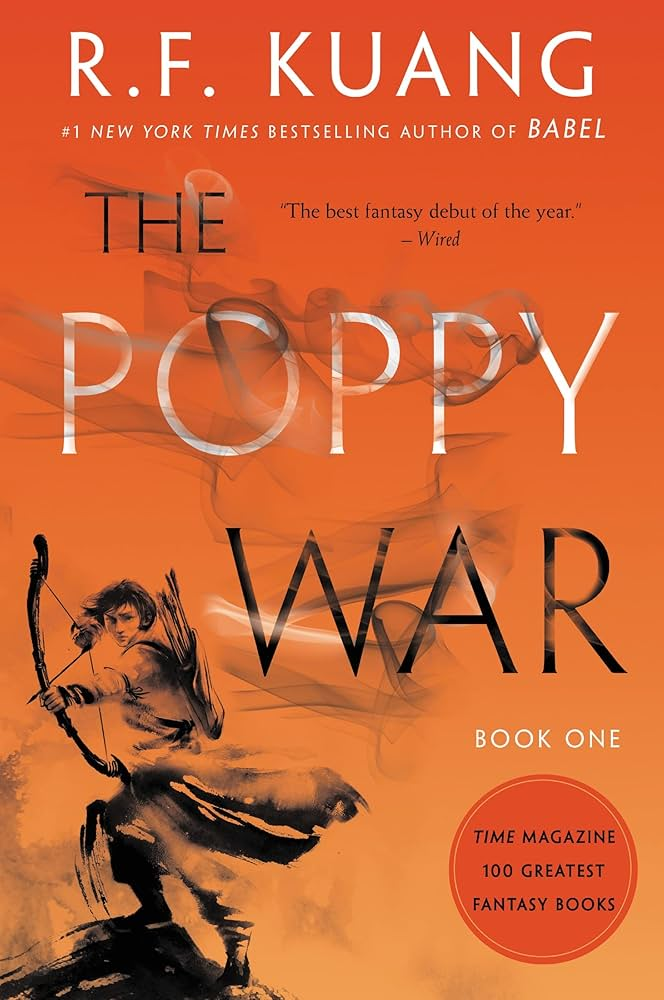
I first encountered Kuang through The Poppy War, a pretty popular book that many have critiqued, but I loved. It starts off like a classic underdog story, where a poor girl from nowhere tests into the most elite military academy in the country, but very quickly turns into a harrowing spiral through addiction, revenge, genocide, and the psychological cost of war. Rin, the protagonist, is one of the most fascinating characters I’ve ever followed. She makes catastrophic decisions, hurts people who care about her, and gets caught in cycles of rage she can’t escape. But Kuang writes her with such clarity that even at Rin’s worst moments, you understand exactly how she got there.
What impressed me most about The Poppy War trilogy wasn’t the magic system or the battles (though those are vivid). It was mainly the characters and the historical context Kuang used as inspiration for her novel. Many have accused Kuang of glorifying violence in The Poppy War, but I believe that she’s instead trying to expose the violence of the real historical events the book is based on. The books echo events from 20th-century Chinese history, but instead of turning it into a backdrop for fantasy heroics, she asks the real question: what does this kind of suffering do to a person?
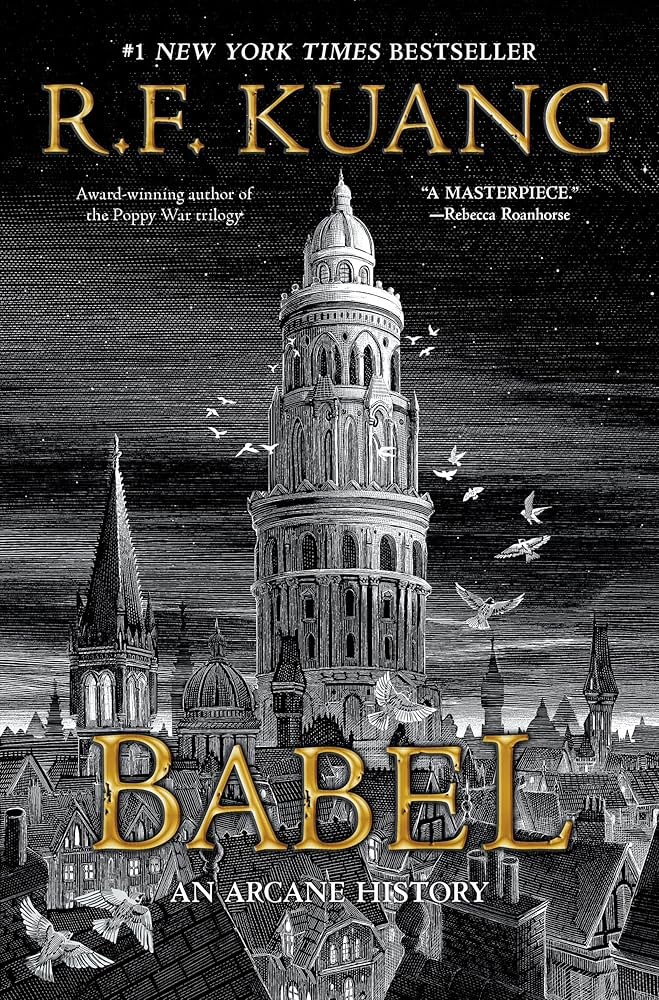
Then there’s Babel, which is a completely different experience but just as devastating in its own way. It’s easily my favorite of her works. Babel has the feel of a tropey dark academia novel, with an elite university, brilliant students, looming secrets, but Kuang turns that narrative around into something deeper. She uses that setting to pick apart colonialism, language, and elitism with precision. Her passion for languages is evident in Babel, and you can tell she has a PhD in linguistics! The book is packed with etymology, long explanatory footnotes, and linguistic analysis, with none of it feeling like showing off.
What makes Babel really hit, though, is the characters’ slow realization that the very institution they love is using them. Watching Robin and his friends navigate belonging, betrayal, and impossible choices is genuinely painful. Kuang delivers yet again with a heartwrenching ending (I won’t spoil anything, just go read it!) Some readers hate the ending; I think it’s exactly the ending the story demands.
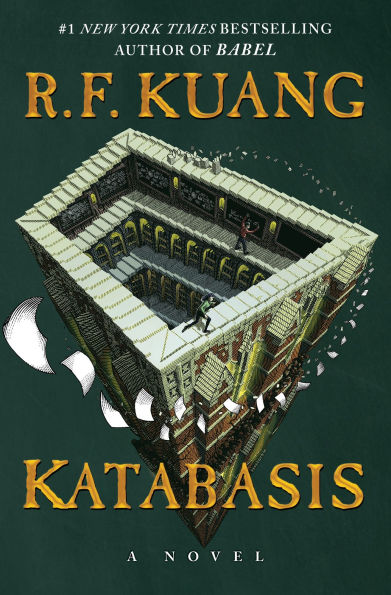
And then there’s Katabasis, Kuang’s latest and most creative novel. The novel follows Alice Law, a driven Cambridge postgraduate in “analytic magick” who, after a catastrophic lab accident that kills her adviser Jacob Grimes, bargains to descend into the Eight Courts of Hell to retrieve his soul, even if it costs half her remaining life.
Katabasis has a genre that’s hard to define: somewhere between fantasy and an academic satire. Kuang uses classical myth like Dante’s Inferno while critiquing the exploitation that young scholars go through. But beneath the satire is a book about what you lose when you sacrifice everything to an institution: memory, identity, and the years you’ll never get back. Kuang asks readers the question: how much will you sacrifice for success?
Readers’ responses have been mixed, as some praise the book’s inventiveness and thematic bite, but others find it overly analytical. (According to Goodreads). Personally, I thought it was just the right amount of educational, explanatory, but still interesting.
Across all her books, Kuang shares one trait: intensity. She does not write casual stories. Her characters and plots are super complicated, often overly so, and she never takes the lazy way out with her writing. Kuang writes like she’s in a constant argument with the world, and reading her feels like being pulled into that argument.
Of course, she has many critics. Some people find her characters unlikeable or her messages too blunt. But honestly, that’s part of why I admire her. Kuang isn’t trying to be comforting. She’s trying to be truthful, even when the truth is ugly or unfair.
So if you’ve been wandering around the library wondering what to read next, consider this your sign: pick up something by R.F. Kuang. Her books are intense, beautifully written, and really unforgettable. Whether you start with The Poppy War, Babel, or Katabasis, you’re in for a ride.
